|
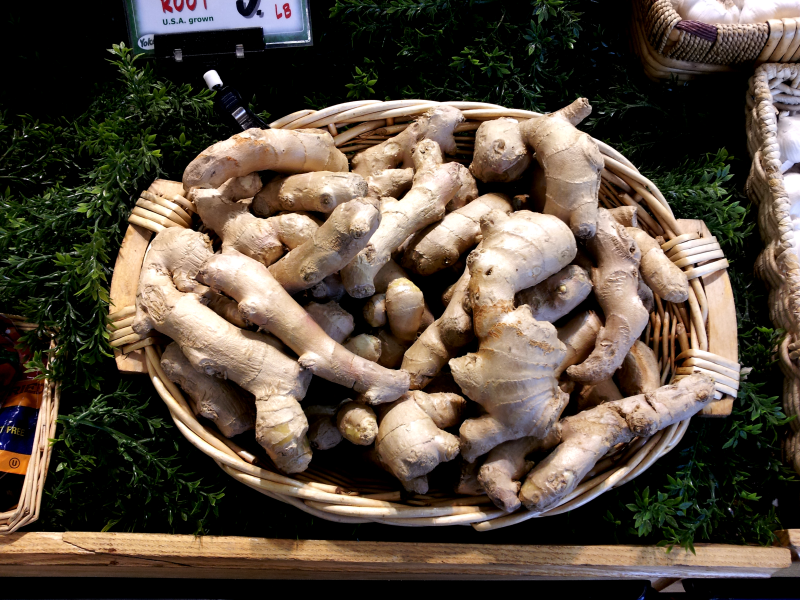
Ginger root, raw |
||||||||||||||||||||||||||||||||||||||||||||||||||||||||||||||||||||||||||||||||||||
|
||||||||||||||||||||||||||||||||||||||||||||||||||||||||||||||||||||||||||||||||||||
|
Common Name: Ginger root, saenggang |
||||||||||||||||||||||||||||||||||||||||||||||||||||||||||||||||||||||||||||||||||||
|
Knobby and light brown, ginger root is used widely in Korean food for its sweet and pungent flavor. Ginger is often used in making stocks and broth to reduce the odor of cooking meat. Ginger is also used grated in marinades and dipping sauces, or sliced in braised and boiled dishes. In the latter, the ginger slices are usually removed before eating the dish. It can be obtained from many supermarkets and Asian markets and is best kept in the refrigerator vegetable compartment, tightly wrapped in a paper towel placed inside a plastic bag. Dried ginger is most often used for medicinal purposes while fresh is most often used for cooking. Equivalents: 1/4 cup, sliced = 1 ounce Substitutes: green ginger (less pungent), galangal (more pungent) |
||||||||||||||||||||||||||||||||||||||||||||||||||||||||||||||||||||||||||||||||||||
|
Nutrition Facts
|
||||||||||||||||||||||||||||||||||||||||||||||||||||||||||||||||||||||||||||||||||||